Słania's Gang
The gang was founded by Roman Słania, a young and intelligent Jew, participant in the September Campaign, who, after returning to Krakow, quickly established contacts with the Gestapo. Recruited into the confidant service, he created its basis his own underground criminal organization, protected by Gestapo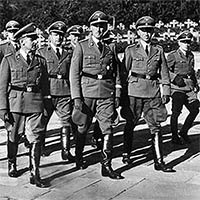 (german: Geheime Staatspolizei) The Secret State Police established in the Third Reich, which ruthlessly fought against all forms of resistance in the occupied territories. Identified with the most terrible German crimes against Poles, and after 1942 also against Jews. Disbanded with the fall of the Third Reich in 1945. Recognized as a criminal organization by the International Military Tribunal in Nuremberg..
Słania's closest coopertives were:
- Krzemek brothers,
- Ryszard Karolewicz from Wola Duchacka, also used the surnames Zając and Karolewski
- Żaczek - son of the butcher
Stanisław Dąbrowa-Kostka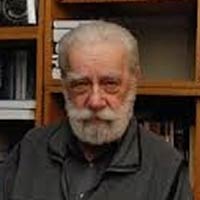 Stanisław Dąbrowa-Kostka (1924-2019) - lieutenant of the Home Army, lieutenant colonel of the Polish Army. During the Second World War, he was active in the Podkarpacie region. Awarded many times, author of books, studies and articles. Involved in scouting activities. He actively participated in the work of the Commission for the Investigation of Nazi Crimes. in his book "In occupied Krakow" (polish: "W okupowanym krakowie") wrote about the gang:
Słania's gang quickly gained the worst fame. Its members were armed by the Gestapo. Being aware of the occupant's support, they were committing their crimes semi-openly, blackmailing and even robbing. In addition to the premises allocated for them by the Germans, they had hiding places in locations they only knew. There, the darkest things were discussed and there were also libations with orgies during splitting the loot.
The gang was untouchable. Every time the Criminal PoliceCriminal Police (German: Kriminalpolizei, Kripo) - German criminal police. The Kripo formally dealt mainly with criminal matters, leaving the Gestapo with political matters and organizing terror. However, in fact, quite often there were cases of cooperation between the two police forces in the fight against political opponents of the Third Reich, in the extermination of Jews, sending people to concentration camps and for providing "guinea pigs" for medical experiments. arrested any of the members of the gang, the Gestapo released them immediately, without giving a chance to be interrogated by the Polish underground soldiers who were working in conspiracy in Kripo. In mid-April 1944, luck turned away from Słania - Kripo arested Zając for a street disturbance. Stanisław Dąbrowa-Kostka describes this event as follows:
Taking advantage of rarely favorable circumstances, he was quickly interrogated, not allowing the information about the informer's arrest to get to PomorskaDuring World War II, the Gestapo headquarters and the temporary detention facility located in the basement were located on Pomorska Street. The testimony of those times are the inscriptions made by prisoners on the walls of the cells. Currently, it houses a branch of the Historical Museum of the City of Krakow. ahead of time. The matter was taken into the hands of 2nd Lt. "Janusz" [Stanisław Szczepanek].
Zając was haughty and self-confident. The interviewee was dodging, but when questioned sharply, he confessed that his companions, including Słania, were having fun in a secret den at 7 Blich Street. The somewhat retouched testimony of Zając, "Janusz" presented to the chief of the Kriminalpolizei, Schubert. It showed that the detained "bandit", Zając, had given the address of the conspiratorial premises where other "Polish bandits" were staying, who - acting quickly - could be captured or liquidated.
Needy of successes, Schubert reacted in the manner expected by "Janusz". Without notifying the Gestapo, he ordered an immediate action by sending four Kripo officers to Blich Street (three of them were people from the "Janusz" network) under the command of a German speaking good Polish, Nordman.
Zając testified that "bandits" are very careful and only react to a special way of knocking. He informed that they had a gun.
Kripo officers secured the ground-floor window facing the street. Zając was led to the flat pointed by him and ordered to knock. The Kripo men were standing against the walls with weapons ready.
The informer came over and knocked. Pistol shots were fired almost immediately from behind the closed door. The fatally shot Zając slumped to the ground. Nordman raised his empi and opened fire. He changed magazines over and over again. Others were also shooting. In his last round the German broke the lock and ordered the fire to cease. Nobody was shooting any more from the inside. The bloodied and massacred bodies of both Krzemek brothers, Żaczek and Roman Słania, were found in the demolished apartment.
Schubert's astonishment knew no bounds, when instead of receiving a reward, the frothing with rage Gestapo men threatened him with a court-martial, or at best by sending him to the eastern front. For a long time he had to explain why he had not informed the Gestapo about the arrest of Zając and the intended police action. He rightly suspected that he was the victim of someone else's clever inspiration, but had no evidence of it.
In the report by Stefan Kaniewski, pseudonym "Nałęcz", item 19 of April 30, 1944, there is information that during the search carried out in Słania den at 7 Blich Street, the Germans found significant amounts of precious furs, gold, diamonds and foreign currency, worth 1,380,000 złoty.