Jakub Lejkin
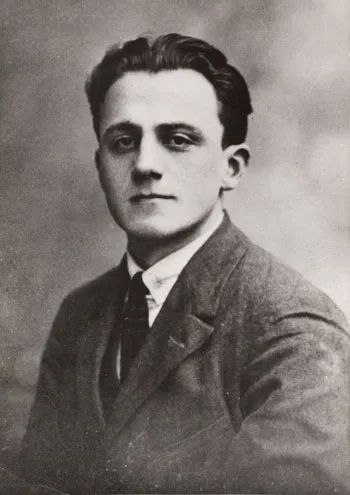
Jakub Lejkin was born in 1906 as the son of a wealthy leather goods wholesaler. He graduated from the Faculty of Law. Before 1940, he worked as a lawyer in Warsaw. During the existence of the Warsaw Ghetto during World War II, he was deputy commander of the Jewish police in the Warsaw Ghetto and a Nazi collaborator with Adolf Hitler's Third Reich.
Der kleiner general (the little general) or little Napoleon - as the Germans called him - was an energetic man of very short stature with a filigree figure. The Judenrat Judenrat (Jewish Council or Jewish Council of Elders) - organizations established by Nazi German authorities during World War II with the task of administering Jewish communities and implementing German orders issued against them. In addition to collaborating with the occupier, most Judenrat also engaged in corruption and were aimed at the destruction of the Jewish population. Only a few of them undertook cooperation with partisans. accepted him for work in the Jewish police
 German: Jüdischer Ordnungsdienst, literally Jewish Order Service, customarily Jewish police - during World War II, they ware partially subordinate to the Judenrat, collaborating with Nazi Germany, Jewish Police units operated inside ghettos, labor camps and concentration camps. The police dealt with requisitions, round-ups of other Jews, escorting displaced people and deportation actions. at the very beginning of the Warsaw Ghetto, as did about 200 other lawyers. During the recruitment process, his application was rejected three times by the committee because of his short stature. He was extremely brutal as a policeman. He suffered from an inferiority complex. During roll call, he used to beat the taller order officers in the face by raising himself on his toes.
The Jewish publicist, Yehoshua Perle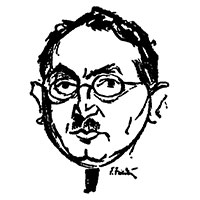 Jehoszua Perle also Joszua Perle (1888 - 1944) - Jewish writer, publicist and translator, a representative of realism and naturalism, writing exclusively in Yiddish. During the German occupation in 1940, he was in the Warsaw Ghetto and worked in the Propaganda Department of the Judenrat Supplies Department, where he edited posters. In 1943, he crossed over to the "Aryan side", but fell victim to a German provocation at the Polish Hotel in Długa Street. He and his son were deported to Bergen-Belsen and then to Auschwitz-Birkenau, where he died in the spring of 1944. , wrote of him as follows:
A small, comical man who would be more suited to the circus than to commanding the police. Or perhaps fit for both? He did his job with a smile on his lips, in a good mood and in a way of a man from the margins of society. Today he delivered so many and so many "heads", tomorrow he will deliver so many and so many - life could not be any better. No bullet has reached him yet.
There walked this little man in high boots and a small jacket with the indispensable cane.
He quickly moved from a sublet room to his own three-room flat with fine furniture. He was referred to as "the little man for big business". He was suspected of accepting bribes and gifts to facilitate employment in good positions in the Jewish police. It was mocked in the ghetto that the heads of the Order Service, including Leikin, had already won the war, because they were inoculated against typhus, protected against starvation and befriended with [the Gestapo]
.
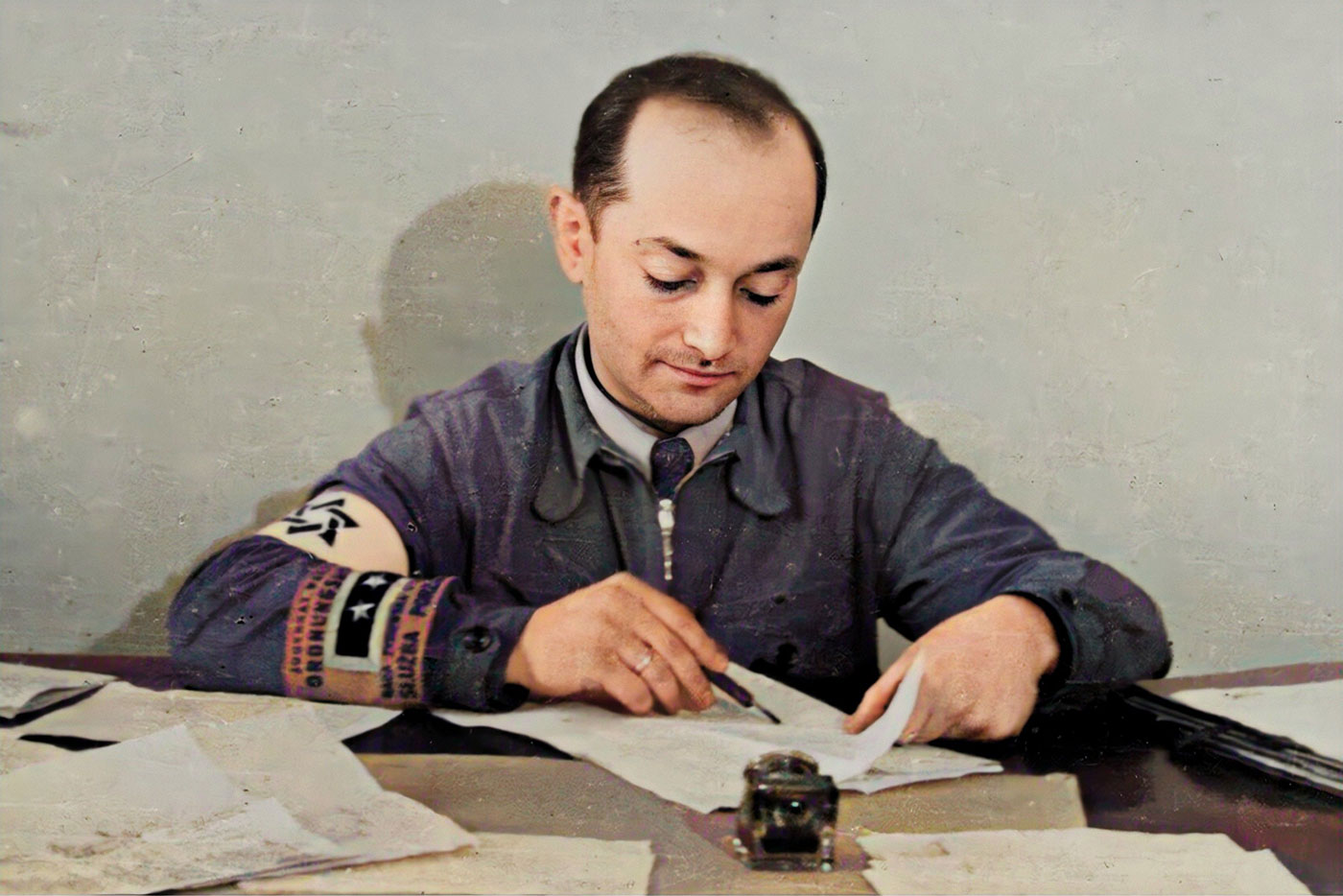
The terror of the Jewish police was also fought with humour. In a collection of satirical poems under the title Silhouettes of illustrious men of the Order Service (pl. Sylwetki znakomych mężów Służby Porządkowej), Lejkin lived to have his place:
Hey boys, hey brave youth,
Catch the Jews to the labour camp.
I'll be first in the line,
Then I'll get a second star.
Picking Jews is a clean thing,
The municipality pays three hundred zlotys,
It's not scandalous
Ask Goldfeder.
And no job is beneath you
Ask Kac about it.
"Second star" is a promotion to regional officer, "three hundred zlotys" is the reward for catching the Jews, Goldfeder was Lejkin's assistant, and Kac his right hand.
Between 1940 and 1941, he became a regional police officer for successfully carrying out night roundups of Jews to labour camps. Thanks to his industriousness and exceptional servility, he attracted the attention of his superior - the Jewish police chief Sherinsky himself - and gained his trust. He was faithfully carrying out all his orders. He was thus further promoted: he became head of the Service and Training Department. He created the House of Detention, which was basically a jail.
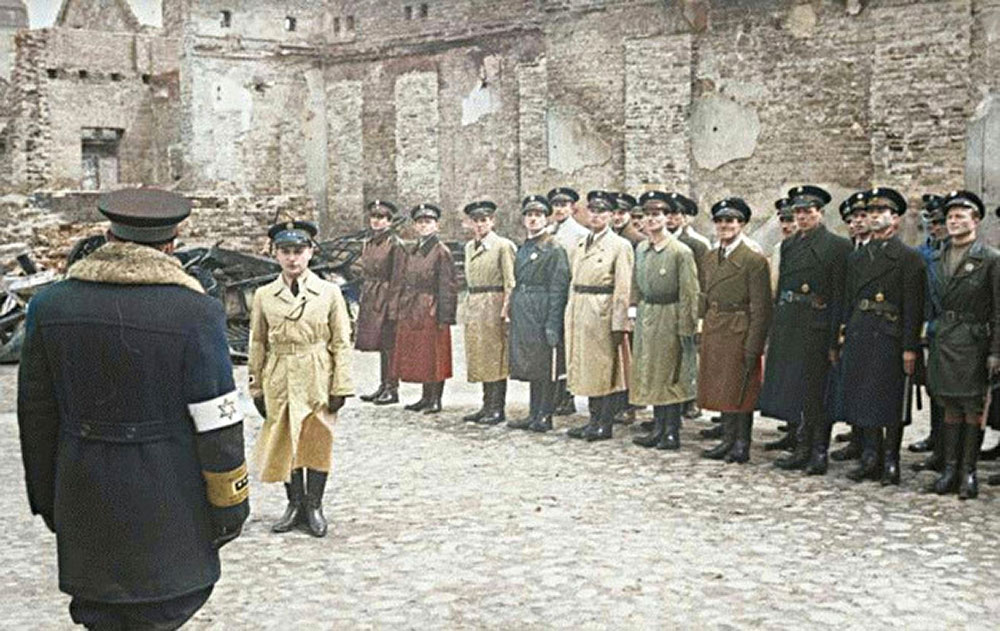
He had the full confidence of his superior. He was appointed to brief troops and was entrusted with the leadership of inspections, i.e. control of the uniformed service. After Sherinsky himself was temporarily arrested by the Gestapo in May 1942, he took over as commander of the Jewish police until July. In holding this position, he played a key role during the so-called Grossaktion Warsaw (Great Action) - deportation and mass murder of Jews from the Warsaw Ghetto to the Treblinka Treblinka extermination camp - a German Nazi death camp in operation from July 1942. The extermination of the Jewish population was carried out there. The Germans sent him mainly transports from ghettos in occupied Poland, including the Warsaw ghetto. Moreover, Austrian, Czech, Greek, Yugoslav, German and Slovak Jews as well as Roma and Sinti were murdered in Treblinka. Victims were killed in stationary gas chambers using flue gases. The number of victims of Treblinka probably reached around 800,000. people. It was the largest extermination center in the General Government and the second, after Auschwitz-Birkenau, in occupied Europe. extermination camp in July 1942. Władysław Szpilman
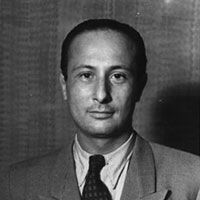 recalled:
(...) the worst began - the displacement of a city district of half a million people, an apparent absurdity that no one could believe. In those first few days, the action was carried out exclusively by the Jewish police, headed by three murderers: colonel Sherinsky and captains Lejkin and Ehrlich. They were no less threatening and merciless than the Germans, and perhaps even more despicable than they were: when they found people who, instead of going down to the courtyard, had hidden somewhere, they gave themselves easily to bribes, but only with money. Tears, pleading and even the desperate cries of children could not move them.
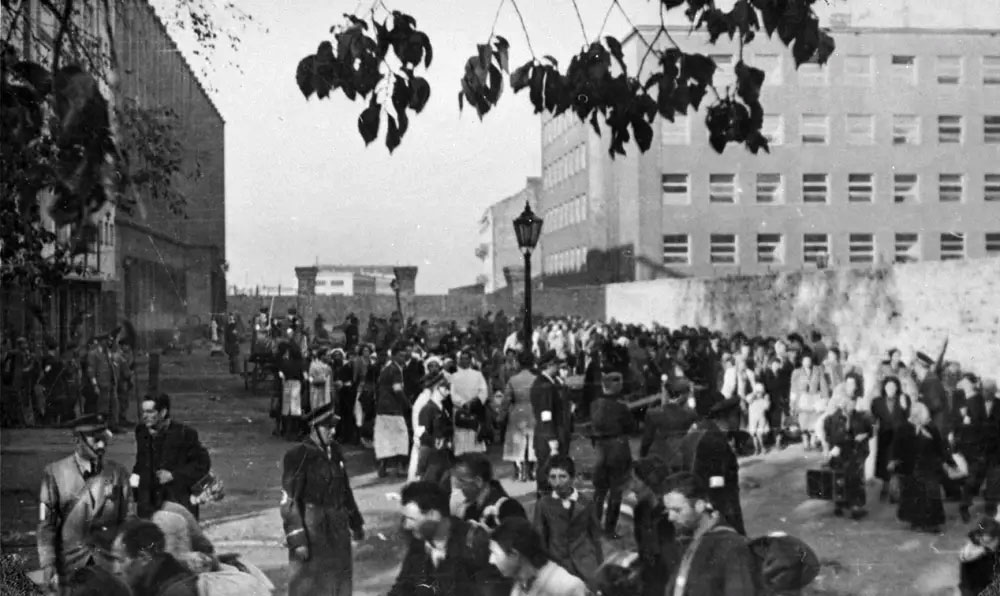
Lejkin himself gave the order that each jewish policeman must deliver 5 Jews to the Umschlagplatz . In order to fulfil their duty, the policemen committed the greatest atrocities.
About a month after the Great Action, during which Lejkin showed particular ruthlessness, he was executed by the Jewish Combat Organization Jewish Combat Organisation (ŻOB) - an underground organisation of armed resistance of Polish Jews during the Holocaust, operating in several major cities, and the best known of the Jewish resistance formations during World War II. . This was the first execution carried out by that group. The sentence was carried out by the Jewish hero and ghetto fighter [Elijah Rozanski] on 29 October 1942 at 6:10 p.m. Marceli Czaplinski - Lejkin's aide-de-camp - was also wounded in the assassination.
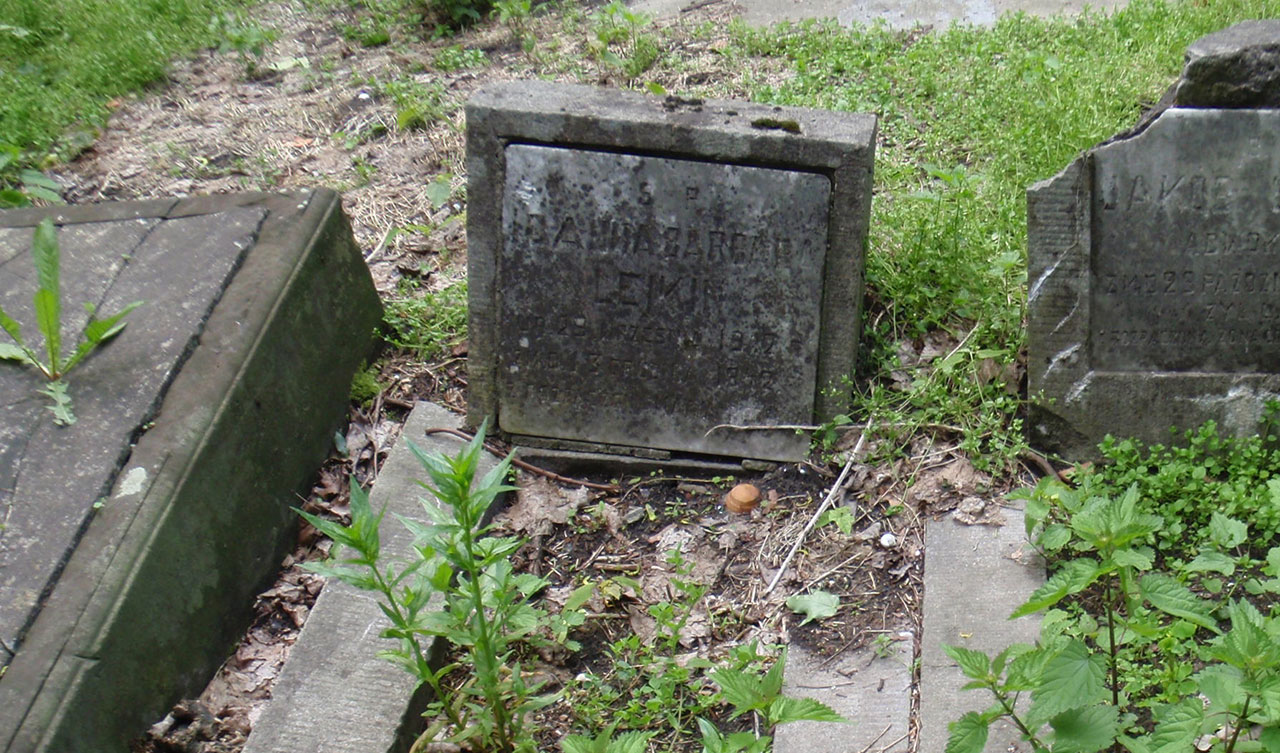
Lejkin is laid to rest in the main alley of the Jewish cemetery on Okopowa Street in Warsaw.