Solomon Morel
Salomon Morel was born in 1919 in Garbowo into the Jewish family of Chaim and Hana. He was a functionary of the security apparatus in the People's Republic of Poland, a genocide accused of crimes against humanity.
During the war, he and his family were hidden by Józef Tkaczyk (he was awarded the Righteous Among the NationsRighteous Among the Nations is an honorific used by the State of Israel to describe non-Jews who risked their lives during the Holocaust to save Jews from extermination by the Nazis for altruistic reasons. The term originates with the concept of "righteous gentiles", a term used in rabbinic Judaism to refer to non-Jews, called ger toshav, who abide by the Seven Laws of Noah. medal). However, they were discovered. Salomon escaped with brother, his parents were arrested and shot. After this incident, Salomon together with his brother Icek and a group of others organised robbery attacks on villagers. The group was tracked down by GL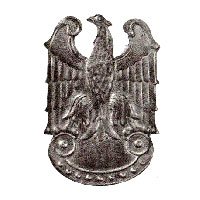 People’s Guard (GL, polish: Gwardia Ludowa) – an underground communist armed organization, created by the communist Polish Workers’ Party in German-occupied Poland, sponsored by the Soviet Union, and aimed to armed fight against the German occupier.. Morel put all the responsibility on his brother, claiming that he had only been in the unit for a few days. He thus avoided execution.
After the Red Army entered Poland, he became a prison guard at Lublin Castle. After a month's work, the prison governor requested the dismissal of Morel and five other guards because they do not conscientiously perform the duties imposed on them, they do not try to comply with the prison regulations, they behave arrogantly and spread rumours about my person, thus hindering my work and undermining my authority
. He was transferred to work in the prison in Tarnobrzeg, and later - in 1945 - to Świętochłowice, where he became commandant of Camp Zgoda (en. consent), where mainly Germans, Germanised Silesians, but also Poles and other nationalities were imprisoned. As far as the Germans were concerned, the Jews in charge of the camp, led by Morel, were repaying them in advance for their past suffering during the war and the Holocaust. The camp was a place for the rapid destruction of prisoners. They were tortured in various elaborate ways or mercilessly murdered straight away. In the camp at Swietochlowice, at least 1,500 people were murdered in less than one year of 1945 during Morel's command.

(...) Morel to us prisoners brimmed with hatred. If he turned his attention to any prisoner, it usually meant a death sentence. (...) I will never forget the beaten. But there was never any mercy. And at the same time, those beaten and killed were mostly simple men and boys from Upper Silesia. (...) The cart with the corpses, which was leaving the camp every morning pulled by the prisoners, was usually overcrowded (...)
- recalled Gerhard Gruszka, one of the prisoners - His speciality was to put a heavy stool, left over from the days of the German concentration camps, between his feet and push the heavy sitting surface onto the prisoner with all his anger. This was always followed by seriously injured fellow prisoners lying down and having to be taken to the camp infirmary, a few with their heads blown off to the corpse barracks
. He also mentioned another Morel's "game" - the pyramid. He had the prisoners lie on top of each other in fours and then, when the pile was high enough, he would jump on top of them to further increase the weight. The people at the base of the 'pyramid' ended up in the morgue, those at the top of the pile had their bones broken, usually their ribs.

The real criminals fled the front, so they picked up random people on any pretext. They took Maria Goring for her surname, Elfryda Uciecha because she was studying in Vienna. They chose richer people to get richer by the way
- recalled Dorota Boreczek, a camp prisoner. When she got there, she was 14 years old. After she survived the camp and returned to her flat with her family, it was already inhabited by a secret police family. Her father, Karol Nieszporek, who hid Home Army soldiers and Jews, was accused of deviating from Polish nationality and his property confiscated. The court rejected these charges, but the confiscated property was not returned. He was lucky. For the Jewish cadres of the camp, besides revenge against the Germans for the Holocaust, the desire to loot was the main motive for the inhuman torture and murder. And the victim-witnesses had to be got rid of.
In his book An Eye for an Eye, John Sack describes how Commandant Morel encouraged his drunken party guests to beat civilian German prisoners with clubs. To do this, he ordered them to lie cross-legged one on top of the other until the human pile reached the height of an outstretched hand. Then the bludgeoning began. The Germans lying on top begged for mercy, those in the middle of the heap only groaned, and from those at the very bottom their entrails flowed out under the weight of twenty men above them."
Torture, rape and murder took place in the camp. People were sent here without court sentences, on the basis of decisions by the security authorities. People also died from diseases in the camp. Morel was punished for leading to the development of epidemics of dysentery and typhus. However, he was awarded the Knight's Cross of the Order of Polonia RestitutaOrder of the Rebirth of Poland, Order of Polonia Restituta - the second highest Polish civilian state decoration (after the Order of the White Eagle), awarded for outstanding achievements in the field of education, science, sport, culture, art, economy, national defense, social activity, service state and developing good relations with other countries. for all his work. However, news of the massacres leaked to the West - the camp was closed down and the award-winning warden Salomon Morel was transferred.
From 1949, Morel held the post of commandant of the Central Labour Camp in Jaworzno, which was a prison for juvenile 'criminals'. Its victims were young Poles who had in some way incensed the Soviet authorities; for patriotic activities, defence of religion, scouting or criticism of the party. The camp was, in effect, just another torture chamber. He told his overseers: "They need to be fucked up so that these sons of bitches, the bandits, know that the people's power is in control here. We'll make them two Berezas here at once. Let them atone for the faults of their fathers with this fascist seed." Morel often informed the residents of Jaworzno that he was transporting young members of the Nazi HitlerjugendHitlerjugend (literally "Hitler's Youth") was a German NSDAP youth organisation organised as a paramilitary group in 1922 as an offshoot of the Storm Troops. The Hitlerjugend promoted the cult of a strong and healthy Germanic race, hence there was a strong emphasis on physical and military exercises combined with discipline and the cult of the individual. Girls were prepared for their role as German mothers and wives. The woman was to be the guardian of family, heritage, race and blood, domestic virtues and the priestess of family and nation. A sense of superiority was instilled in the youth, their own code of honour was used for this purpose, the organisation had banners, anthems and martyrs who died in the fight against political opponents. Harvest relief actions, scrap metal collections, winter relief actions, second-hand clothing collections were organised. Use of weapons was practised, marches were organised, and cartography were taught. Urban youth were sent to the countryside for compulsory training. . Residents challenged them and threw stones at them. The 'resocialisation' system consisted of severe and elaborate punishment for the smallest offences. Janusz Biesiadowski, for example, was himself locked in a wet and dark punishment cell for tossing a bit of food to a colleague: It was a basement without a window, paved with concrete. On the concrete in the water were a dozen bricks already lined up in rows like the rungs of a ladder. When I could no longer stand up or squat, I would lie down on them, always on my side, putting my hand underneath me
. This is what rehabilitation looked like.
In 1954, Salomon Morel was decorated again - with the Golden Cross of MeritCross of Merit - Polish civil state decoration, awarded for merits to the State or citizens. The Cross of Merit was initially the highest award for civilians who, after Poland regained independence in 1918, distinguished themselves in their work for the country and society, fulfilling activities that went beyond the scope of their daily duties. The Cross of Merit comes in three degrees: Gold Cross of Merit, Silver Cross of Merit, Bronze Cross of Merit.. After 1956, he worked in various prisons in Silesia. In 1960 he was awarded the badge of Exemplary Prison Officer. In 1964, at the Faculty of Law and Administration of the University of Wrocław, he defended his master's thesis "Prisoners' work and its significance".
When he found out that a warrant for his arrest for genocide crimes was being prepared in the prosecutor's office, he fled to Israel and the Israeli government refused to extradite the criminal to Poland. Until 1998, however, he received a Polish pension of 2,500 zloty (around $715).

He died undisturbed in Tel Aviv in 2007. Unpunished. Rewarded. Never answered for his crimes. He cynically asserted that the camp he was in charge of had normal, even sanatorium-like conditions
.