Julian Appel
Julian Appel Along with Maurycy Diamant he was at the forefront of the most dangerous network of Gestapo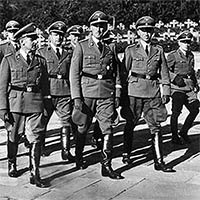 (german: Geheime Staatspolizei) The Secret State Police established in the Third Reich, which ruthlessly fought against all forms of resistance in the occupied territories. Identified with the most terrible German crimes against Poles, and after 1942 also against Jews. Disbanded with the fall of the Third Reich in 1945. Recognized as a criminal organization by the International Military Tribunal in Nuremberg. agents in Krakow, Poland. Its members often impersonated the Polish underground. They detected and handed over to death Jews as well as Home Army
 Home Army (AK, polish: Armia Krajowa) – the clandestine armed forces of the Polish Underground State during World War II. and National Armed Forces
 National Armed Forces (NSZ, polish: Narodowe Siły Zbrojne) – Polish underground military organization of the national camp, operating in the years 1942–1947, with around 75,000 people at its peak. During the German occupation, it fought with the Germans and fought against Polish communist formations: the People’s Guard, the People’s Army, as well as the Soviet partisans and robber gangs. soldiers. They managed to cause so much damage that from the summer of 1943 to the spring of 1944, Krakow's Kedyw
 began the liquidation of its members and shot a dozen or so.
Appel was also active on a daily basis under a different name: Jerzy Konczyński - this is what Stanisław Dąbrowa-Kostka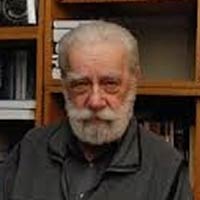 Stanisław Dąbrowa-Kostka (1924-2019) - lieutenant of the Home Army, lieutenant colonel of the Polish Army. During the Second World War, he was active in the Podkarpacie region. Awarded many times, author of books, studies and articles. Involved in scouting activities. He actively participated in the work of the Commission for the Investigation of Nazi Crimes. reported in his book "In occupied Krakow" (polish: "W okupowanym Krakowie"). Also Aleksander Bieberstein
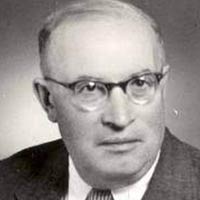 Aleksander Bieberstein (1889 - 1979) - doctor, diarist of the Krakow ghetto. Throughout the entire period of World War II, Bieberstein kept notes and records documenting the fate of Krakow's Jews, which, however, were lost during the evacuation in the Gross-Rosen camp. After the war, he tried to recreate this documentation as accurately as possible from memory and from conversations with the surviving Krakow Jews. in "Extermination of Jews in Krakow" (polish: "Zagłada Żydów w Krakowie") states that Appel was an officer of the Department of Civil Security (German: Zivilabteilung Ordnungsdienst) in the Krakow ghetto and was, among other things, composing lists of Jews for deportation to extermination camps.
Józef Bratko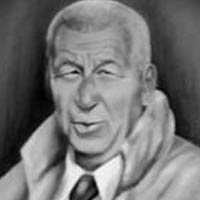 Józef Bratko - A graduate of journalism at the Faculty of Philosophy and History of the Jagiellonian University. A journalist by profession. He deals with literary and historical documentary reporting, journalism, poetry, as well as easel painting and drawing. A respected journalist, known for his historical interests, years ago with diligent accuracy and persistent inquisitiveness, investigated various secrets related to the Nazi occupation and the police system of the Third Reich. gives some facts from the life of Appel in the book "Gestapo" (polish: "Gestapowcy"); His cooperation with the Gestapo was excellent and he was trusted by the Gestapo officer Rudolf Körner, nicknamed “Big Teodor” - a former professional policeman from the Dresden Sicherheitspolizei. On December 11, 1943, he arrested Janina Pałasińska, pseudonym "Telimena" - a scout, member of the platoon "Alicja", subordinate to Kedyw. "Telimena" was an example of a great underground organizer, despite her young age. She was 17 years old on the day of her arrest. Appel accused Alexander Förster - a German Jew, a famous Gestapo agent who was said to have played a major role in espionage for Germany - of collaborating with British intelligence.
Jerzy Jarowiecki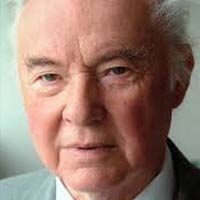 Jerzy Jarowiecki (born 1930) - press expert, literary scholar, press historian, professor at the Pedagogical University in Krakow, Poland., in the publication "The underground press in Krakow during the Nazi occupation 1939-1945" (polish: "Konspiracyjna prasa w Krakowie w latach okupacji hitlerowskiej 1939-1945"), gives another example of collaboration with Germany: Appel denounced Szymon Dränger - one of the leaders of the Krakow underground.
In one of the files in the archives of the Provincial Office of Internal Affairs in Krakow there is a document entitled „CASE OF JEWISH RESIDENCE” (polish: „SPRAWA REZYDENTURY ŻYDOWSKIEJ”). The room in which the Jewish confidants had a hiding place was something between a cafe and an apartment. The burden of working out the dangerous agents was taken over by the underground counterintelligence. Here is an excerpt from the report from July 3, 1943:
As a result of the interviews, it was found that at Sławkowska street no 6, four individuals occupie room no. 2 on the 1st floor and no. 10 on the third floor two rooms. All four are unregistered and the cards displayed are fake. These are Gestapo agents - Jews: Julian Appel, Mieczysław Bilewski, or Biełewski, Marian Diamand and a Jewish woman Stefania Brandstaetter.On the margin, a note written with a pencil:
all four (...) are active members of the Gestapo, armed all the time. Recently a fifth Jew joined them, the name has not been established.
The residence of Jewish agents operated until August 1944. Then they were liquidated.
In January 1945, Appel left to the west with the Gestapo men. While they were in Reichenberg (now Liberec in the Czech Republic), he told Körner that he had worked for British intelligence. He disappeared without a trace.